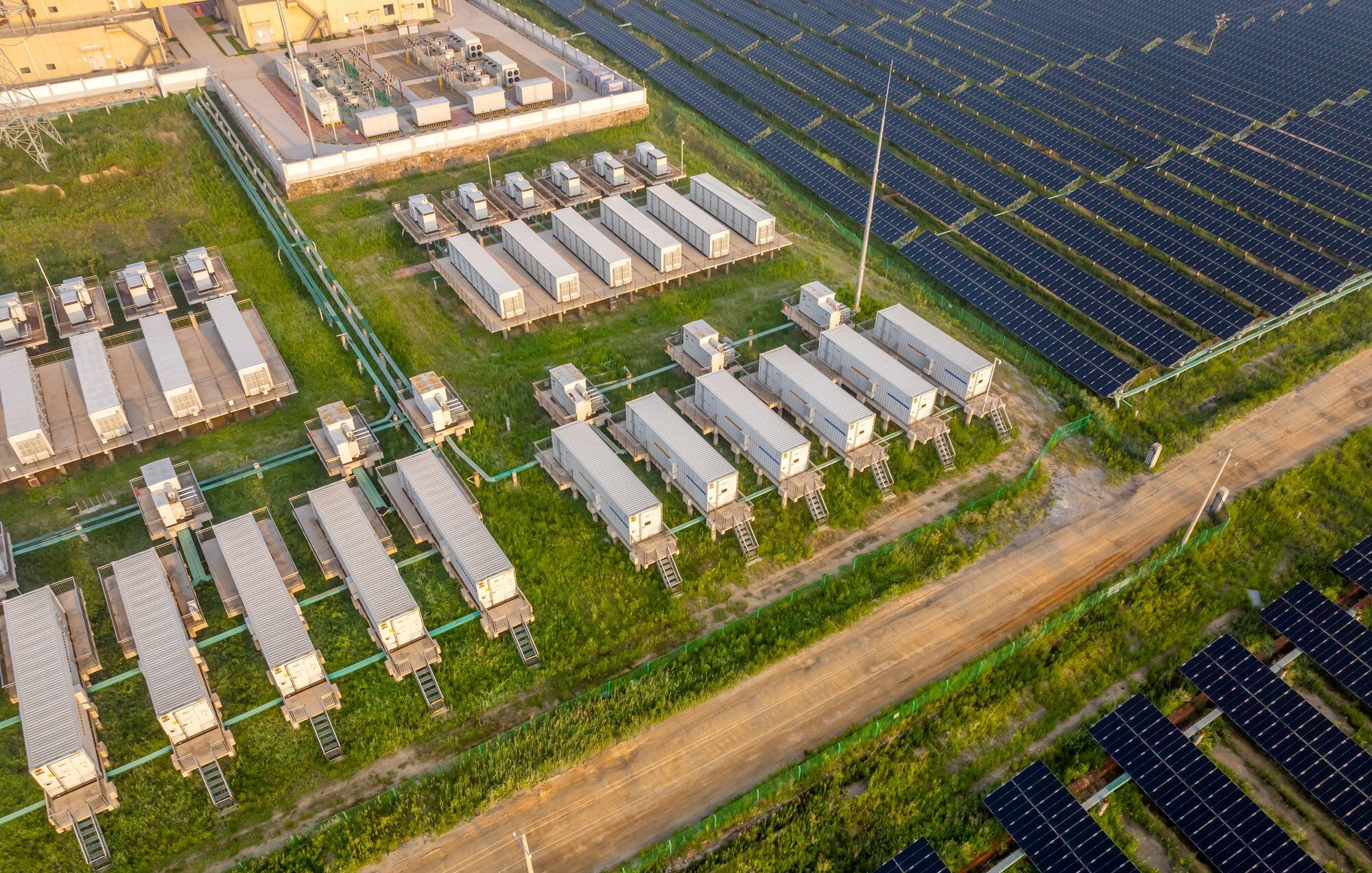
Battery storage brings flexibility to energy production
The importance of battery storage in today’s energy system has grown significantly. As the share of renewable energy sources such as solar and wind power increases, balancing electricity production and consumption becomes increasingly challenging. Battery storage plays a key role in this, as it enables energy to be stored when electricity demand is low relative to production. In the opposite situation, stored energy can be discharged to cover consumption.
The transmission system operator (TSO) has set various requirements for battery storage based on the voltage level at the connection point and the rated capacity of the storage unit. Generally, the requirements become stricter as the size of the battery storage increases. For larger storage, simulation models are required to enable connection to the grid.
To ensure efficient operation of battery storage and smooth data exchange with the grid, Energy Management System (EMS) is needed to control the storage unit. EMS optimizes battery usage and enables seamless integration with the grid and other systems. For battery storage control, Syncron Tech has developed EMS that supports trading, resource management, and the required real-time data exchange with the TSO.
SyncPower® is a software solution for the energy sector. It is built on modules that support various functions and is powered by a shared set of background tools for calculation, reporting, and diagramming.
Contact us.


Syncron Tech is focused on industrial production management solutions and services.
Copyright © Syncron Tech Oy 2021. All rights reserved. Privacy policy and Cookie policy.